
A New Pipe.
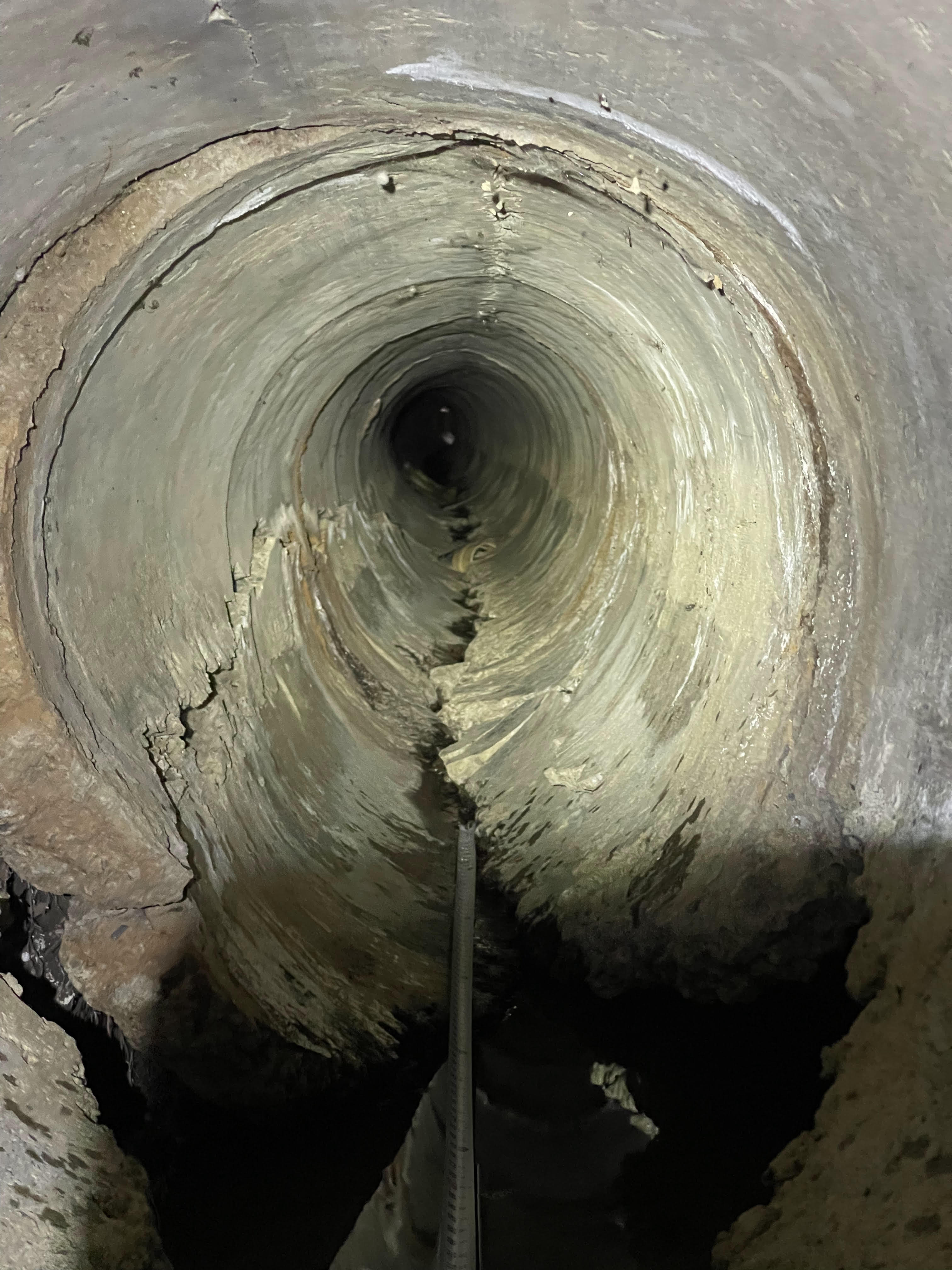
Inside the Old One.
No Excavation.
Cured-In-Place Pipe lining is the most cost-effective method for rehabilitating deteriorated pipelines without disturbing the surface above. We have installed CIPP liners in mainline sewers, stormwater systems, and force mains across Northern California since 2008.
How CIPP Works
A flexible, resin-saturated liner is inserted into the existing pipe and inflated against the pipe wall. Once cured — using hot water, steam, or UV light depending on the liner system — it hardens into a seamless, structurally independent pipe within the host pipe.
The result is a pipe-within-a-pipe with no joints, no seams, and no corrodible material. CIPP liners installed to ASTM F1216 specifications carry a 50-year design life. No excavation is required at any stage of the process.
CIPP vs. Open-Cut Replacement
Traditional pipe replacement requires excavation, shoring, pipe removal, new pipe installation, backfill, compaction, and surface restoration. In urban environments, that means traffic control, utility coordination, and pavement reconstruction.
CIPP eliminates all of it. No trench, no spoil, no surface restoration. For most municipal mainline applications, CIPP is 30–50% less expensive than open-cut on a per-foot basis — and it's completed in a fraction of the time.
Where We Use CIPP
CIPP is appropriate for gravity sanitary sewers, stormwater mains, and pressure pipes in a range of diameters. We work in pipe from 6" to 60" diameter. Common applications include:
- Gravity sewer mainlines with root intrusion, joint displacement, or corrosion
- Stormwater infrastructure with structural deterioration
- Force mains and pressure pipes requiring corrosion-resistant relining
- Pipes under roads, driveways, and structures where excavation is impractical
From Assessment to Sign-Off
CCTV Inspection
We begin every project with a NASSCO PACP-coded camera inspection. This documents existing pipe condition, identifies structural defects, measures pipe dimensions, and confirms CIPP suitability. You receive a full written report before any liner is ordered.
Cleaning & Preparation
High-pressure hydro jetting removes root intrusion, scale, grease, and debris from the pipe wall. The host pipe must be clean to specification for the liner to achieve a full, consistent bond. This step is not skipped.
Liner Installation
A resin-saturated felt or fiberglass liner is inverted or pulled into position within the host pipe. It conforms precisely to the pipe's interior geometry — including bends, offset joints, and diameter variations.
Curing & Lateral Reinstatement
The liner is cured in place using the appropriate method for the liner system and site conditions. Lateral connections are reinstated robotically from within the pipe — no excavation at connection points.
Final Inspection & Documentation
A post-installation CCTV inspection confirms full liner seating, proper lateral reinstatement, and absence of voids or wrinkles. Full documentation is provided for your project records and asset management system.
Related Services
Have a Pipeline That Needs Assessment?
Call us. We'll tell you whether CIPP is the right solution for your system — and what it will cost before we start.
(661) 645-9724